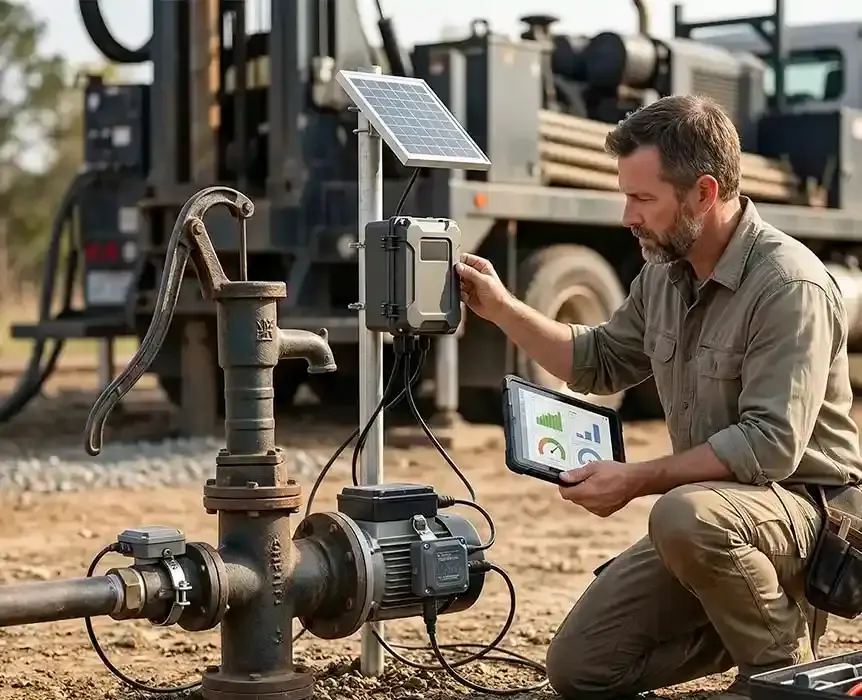
Across the United States, particularly in states like Texas where water resources are critical for agriculture, industry, and residential supply, operators are increasingly shifting toward digital monitoring technologies.
These systems enable continuous tracking of equipment performance and water conditions without requiring constant human intervention. One of the most important innovations supporting this shift is real-time water level monitoring, which allows operators to monitor wells, tanks, and reservoirs remotely. By implementing advanced sensors, cloud-connected dashboards, and automated alerts, drilling operations can move from manual maintenance to intelligent digital management.
This article explains how digital monitoring is transforming drilling operations, the technologies involved, and why real-time systems are becoming essential for modern water infrastructure.
01. Digital Transformation
How Digital Monitoring Is Changing Drilling Operations
Real-time digital monitoring replaces manual inspections with sensor-based systems that continuously collect and transmit operational data. These systems measure parameters such as water levels, pump performance, pressure, and flow rates.
By integrating a water level monitoring system, operators receive live data, automated alerts, and predictive maintenance insights. This reduces downtime, prevents equipment failure, and improves water resource management across drilling operations.
Key Concepts Behind Digital Drilling Monitoring
Digital monitoring in drilling combines several technologies to create a connected system that continuously observes operational conditions. Important concepts include:
Remote sensors
Cloud-based data platforms
Internet of Things (IoT) devices
Automated alerts
Predictive maintenance algorithms
Remote dashboards
A modern water tank level monitoring system collects data from sensors installed in tanks, wells, or reservoirs. The system then sends that data to a digital interface where engineers and operators can review trends and receive alerts. Instead of waiting for problems to appear during manual inspections, operators can detect issues in real time.